Who Benefits

From Every Bean Counts Donations?

How It Started

It starts with The Coffee Trust

Bill Fishbein, the founder of The Coffee Trust witnessed the suffering of small-scale coffee farmers over 30 years ago and ever since has been working on behalf of small-scale coffee producers in Latin America.

Witnessing first hand the poverty that so characterizes the lives of these producers, it became even more challenging to see how lucrative the specialty coffee trade had become over this same period of time.

Meanwhile

Income from coffee alone has never been able to sustain a coffee farming family. Even today, while coffee prices have catapulted to their highest point in generations, coffee farmers still cannot raise a family on income solely from coffee.

It has been frustrating and heart-wrenching to see how lucrative the coffee trade has become while the farmers have consistently been left behind.

Unable to understand why the producers shouldn’t enjoy a fair share of the profits their products earn in the States, Every Bean Counts has found a way to include the farmer in the success of a thriving industry.

It was an idea that sprouted out of the many attempts to do various fundraisers over the years. We wanted to create something that could bring the farmers and coffee shops and roasters closer together.


The Chajulense Story

The soil in the Cuchamantanes Mountains is rich

And filled with the spirit of the Chajulense people. Not only has it been a safe haven from external threats, it has brought forth some of Guatemala’s finest quality coffee, which has been sold to specialty coffee roasters all over the world. The story of coffee and the Chajulense people is a brutal one, yet one filled with courage, resilience and the soul of the Maya people.

In the Western Highlands of Guatemala lie the Cuchamatanes Mountains. The weather in the Cuchamatanes can be so wet, so raw, and so cold, it can cut you like a machete. The days can be so blistering hotyou can get third degree burns in the shade. Deep in these mysterious, rugged mountains live the Chajulense [cha-hoo-LENZey] people—a sect of Maya Ixil [ee–SHEEL] people who have made these mountains their home for thousands of years.

pg2

In the mountains

Like most indigenous people, the Chajulense lived on the same land for centuries, caring for it, surviving on it, but never owning it. Land ownership was simply not congruent with the Maya culture. But land ownership was congruent with the developing oligarchy in Guatemala, and by the 20th century, powerful economic interests were usurping land from unsuspecting indigenous farmers. In 1960, when Jacobo Arbenz, the democratically elected president who championed land reform, was removed from office through a coupe d’etat, wealthy Guatemalans influenced the government to use the military to force indigenous people from their homes and their farms. To protect the “new landowners,” the military often maintained a presence in these areas for long periods of time.

By the early 1980s, the conflict had become brutal; the government was sending the military to ever more remote regions to remove indigenous people from their lands. One such region was Guatemala’s Western Highlands. However, there was one part of the highlands that the military dared not go: the mysterious and unrelenting Cuchamatanes Mountains. And within the deepest recess of the mountains there was one region that they feared the most, the remote township of San Gaspar Chajul (more commonly referred to simply as Chajul), home of the Chajulense people.

As the government appropriated more and more land from Guatemala’s indigenous peoples, a group of insurgents rose up to confront them. In San Gaspar Chajul a small cadre of these anti-government insurgents came to speak out against the government’s effort to take land from the Chajulense people. In return, they asked the Chajulense for food and lodging and tried to recruit young people from Chajul and its surrounding pueblos to their ranks.

When the army heard of this, they sent soldiers to root out these insurgents. The soldiers were finally forced to travel through the harsh climate of the Cuchamatanes Mountains and to the remote municipality of San Gaspar Chajul. The insurgents, knowing the brutal methods the military used to root out dissidents, fled from Chajul deeper into the recesses of the mountains. This left the Chajulense people, who had not invited the insurgents to Chajul in the first place, and who had no side in this war, to face the wrath of the military alone.


When the army heard of this, they sent soldiers to root out these insurgents. The soldiers were finally forced to travel through the harsh climate of the Cuchamatanes Mountains and to the remote municipality of San Gaspar Chajul. The insurgents, knowing the brutal methods the military used to root out dissidents, fled from Chajul deeper into the recesses of the mountains. This left the Chajulense people, who had not invited the insurgents to Chajul in the first place, and who had no side in this war, to face the wrath of the military alone.


In a brutal attempt to discourage the Chajulense people from welcoming and housing the insurgents again, the army murdered the families that had assisted the insurgents in any way—a warning to the rest of the community of what might befall them and their families if they provided any support for the insurgent’s cause. When the soldiers left, the insurgents returned. And upon their return, they brutalized and killed those they feared were now supporting the military. When the military got word of this, forces were sent back to Chajul to root out the insurgent enemy again.

And thus began a revolving door: when the military came, the insurgents left; when the military left, the insurgents came. Each time these forces came and left, the Chajulense people were brutally caught in the middle, and before long, half the Chajulense population was killed. Fearing for their lives, those who survived did the only thing they knew they could do: they fled deeper into the recesses of the unforgiving Cuchamatanes Mountains.

And thus began a revolving door: when the military came, the insurgents left; when the military left, the insurgents came. Each time these forces came and left, the Chajulense people were brutally caught in the middle, and before long, half the Chajulense population was killed. Fearing for their lives, those who survived did the only thing they knew they could do: they fled deeper into the recesses of the unforgiving Cuchamatanes Mountains.

A War, A Priest, and Defying the Odds

There wasn’t a good side or a bad side in the war. While most of the atrocities were blamed on the military, the insurgents committed their fair share as well. Massacres were beyond human understanding. Hundreds of innocent men, women and children were brutally murdered by both sides. In an attempt to protect the innocent from the violence of war, priests in the region began to organize the people so they would not be so vulnerable to either side.

They organized members of the community into groups, established for the sole purpose of protecting the people from both the military and the insurgents.

But the military only saw these priests as organizing the villagers against them and in support of the insurgent cause, so they ruthlessly murdered the priests, sometimes in the “safety” of their own churches.

By 1989

two priests had already been murdered in Chajul, and a third, Rosolino Bianchetti of Italy, was on his way to the community to replace them. Upon his arrival, Rosolino saw the ruin that the war had brought upon the Chajulense people. He could see the devastation that they lived in daily. He saw their tattered homes, the poverty and the brutality they had suffered. But Rosolino always saw hope, even if it was just a glimmer.

In an attempt to pull Chajul out of the depression of war, Rosolino established a small coffee association. At the time, very little coffee was grown in Chajul, but Rosolino and a small group of Chajulense farmers saw the potential it had to restore some semblance of life to the devastated community. And this is how Asociación Chajulense was born, and how coffee became part of the spirit of the Chajulense people.

War still raged in Guatemala, but Rosolino opened a clear and frequent line of communication with both the military and theinsurgents. He continuously assured them all that Asociación Chajulense had no political affiliation whatsoever and that the association was established for the sole purpose of providing a livelihood for the Chajulense people.

Defying all odds, the Chajulense people began to filter back from the mountains to Chajul, and in these darkest days, coffee and Asociación Chajulense began to provide a beacon of hope to the devastated Chajulense people.

Coffee and the Changing Dynamics in Chajul

The war officially ended in 1996, leaving the Chajulense people devastated with a deep sense of victimization and an out-of-control level of mistrust of outsiders. Asociación Chajulense provided one of the few economic opportunities in Chajul and became the first fair trade, organic coffee association in Guatemala.

In an effort to diversify farmer income, Rosolino created a honey project, a women’s textile project, a cardamom project, and a cheese factory. Rosolino was a social entrepreneur in tattered robes. He established a radio station, a training center, and a hostel. He created a mediation process to solve legal problems, a natural medicine program, an education program for adults, scholarships for Chajulense youth to attend secondary school, and a program to educate the Chajulense people in human rights. His creative efforts to help the Chajulense people had no limits. But there were limits.

By 2006 the association had found itself in a deepening economic crisis

It had bitten off more than it could chew and had to drop many of its initiatives. Two projects remained strong: coffee and honey. But by 2008, continuing its social mission was beyond Asociación Chajulense’s means.

In an effort to improve the social fabric of Chajul, the coffee association invited a small group of nonprofits, business executives and coffee entrepreneurs to Chajul to form Fundación Ixil, a Guatemalan foundation established to raise funds, implement social programs, and take a proactive development role in the region. The foundation provided support for primary and secondary school education, and helped build a children’s library. It provided high school and university scholarships to Chajulense youth. But for a number of complicated reasons, Fundación Ixil dissolved shortly after its founding. However, some of its members remained in the region committed to improving conditions for the Chajulense people.

The Coffee Trust was the sole remaining non-profit from the group.

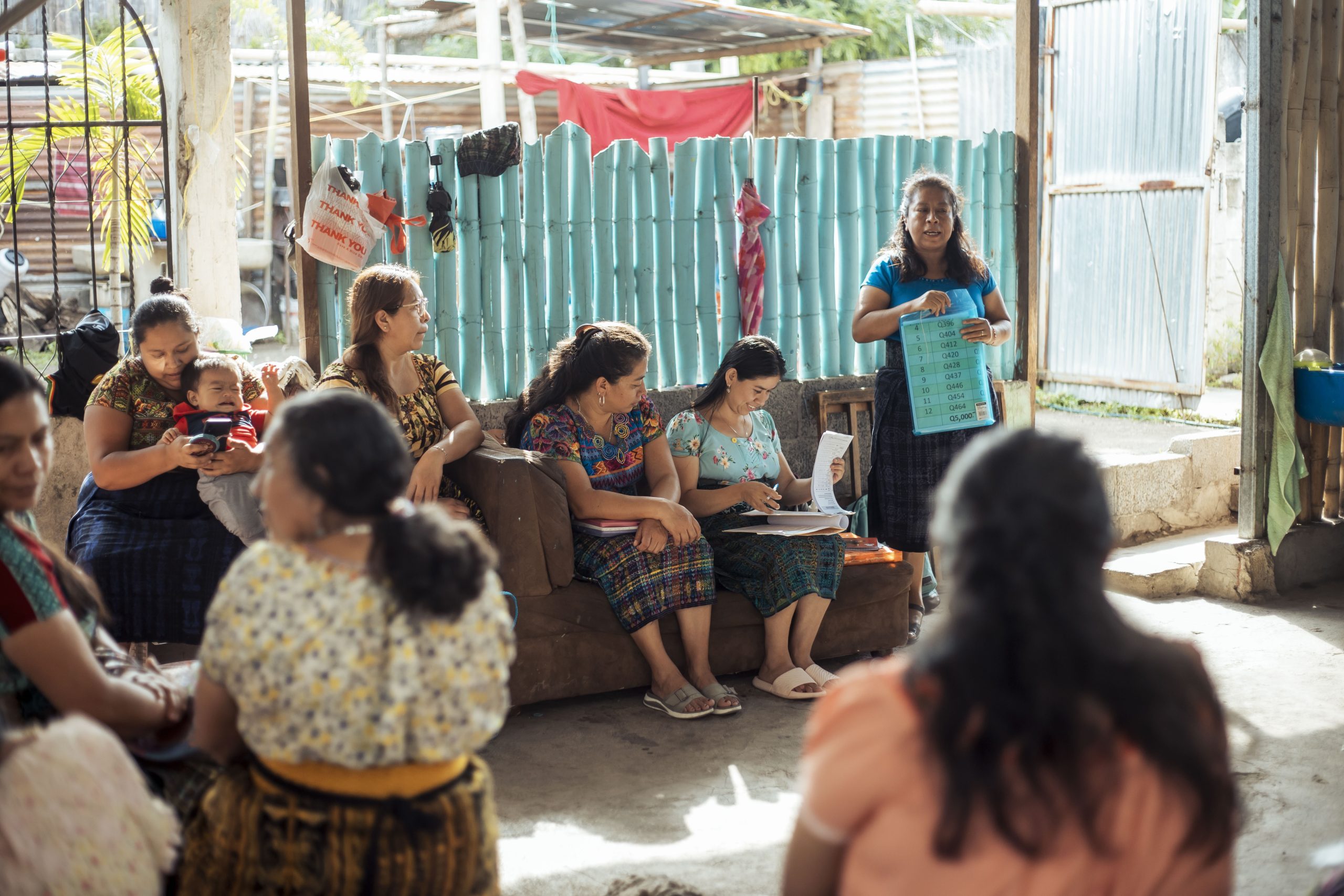
Feeling the power and the resilient spirit of the Chajulense people, The Coffee Trust approached the challenges in the region differently, envisioning self-managed projects directed by the people themselves. Within several years, honey producers became their own fair trade, organic honey cooperative (CopiChajulense). The women’s textile group created a women’s savings and micro-credit program that grew from its original 20 members to close to 3,000, eventually becoming its own independent cooperative, Mujeres Chajulense. The farmers from Asociación Chajulense produced more coffee than any other time in their history. Honey helped diversify coffee producers’ income, and the women’s micro-credit group became the only low-interest lender to the poor in the region. They gave small loans for women to start or improve cottage-type businesses to add to family income.

Adversity Never Sleeps in San Gaspar Chajul

In more Recent Times

Covid-19 has brought the economy to a grinding halt and hurricanes Eta and Iota have destroyed roads and bridges. Some homes were lost and hundreds of coffee farms were damaged, some extensively. Cell towers were shut down further isolating tiny villages like Chel.

Some roads have been completely washed away. But, food and essentials are beginning to trickle in through difficult, yet somehow passable roads. While the worst is over, Asociación Chajulense, The Coffee Trust and other organizations have already begun collaborating to deliver coffee plants to those producers whose farms have been damaged the most.

It will be a while before things are back to normal for the Chajulense people. However, as has happened numerous times in the past, the Chajulense people rise to the challenge and with their grit, determination and their will to survive, and they will do whatever has to be done.

Initiatives for 2025


2025 Initiatives

Listed below are just some of the main projects The Coffee Trust is engaged in this year.

Coffee

The Coffee Trust has established a microcredit pilot project with Chajulense coffee farmers in an effort to develop opportunities for farmers to create a stream of local income, unrelated to coffee. The goal is to provide additional income for farmers, as even when coffee prices are high, coffee alone cannot sustain a family.

Women's Savings & Microcredit - Chajulense

The Coffee Trust has been supporting the Women’s Women’s Savings & Microcredit Organization in San Gaspar Chajul for over 15 years, as the project grew from one micro-credit group that began with 20 women into two microcredit organizations with 2,000 women. These days, The Coffee Trust supports both groups with financial management, organizational development and leadership development.

Women's Savings & Microcredit - San Juan la Laguna

A few years ago, The Coffee Trust introduced the Chajulense Women’s Savings & Microcredit Organization to Vision Guatemala, another women’s organization in San Juan la Laguna far from San Gaspar Chajul.  The women from Vision Guatemala wanted to establish their own microcredit groups.  At those initial meetings, the seeds were planted for a developing microcredit initiative in San Juan.  These days, The Coffee Trust supports Vision Guatemala’s microcredit effort with financial management,  organizational development, leadership development along with fundraising training so Vision Guatemala can begin to take responsibility for its own fundraising.

Honey Program

The Beekeeping Program provides farmers with a new way to earn a sustainable living.

Several years ago, The Coffee Trust assisted several Chajulense beekeepers in forming their own fair trade, organic honey cooperative. Since then, The Coffee Trust has supported a number of best practices projects and others that improve honey quality and honey production. Most recently, The Coffee Trust matches the same number of new, efficient hives that CopiChajulense buys with an equal amount purchased by the beekeepers.

Scholarships
* The Coffee Trust continues its long standing support for education by supporting a first-class middle school and high school in San Gaspar Chajul offering extraordinary education to Chajulense youth that otherwise would not be available in the region.
*The Coffee Trust continues to offer higher education scholarships to indigenous youths from San Gaspar Chajul and San Juan La Laguna as well as adults from both regions looking to get a college degree.
Learn More

To learn more about the Coffee Trust

go to  The Coffee Trust

See us in Action!

Micro Lending Programs

Gallery